Tiếng Việt



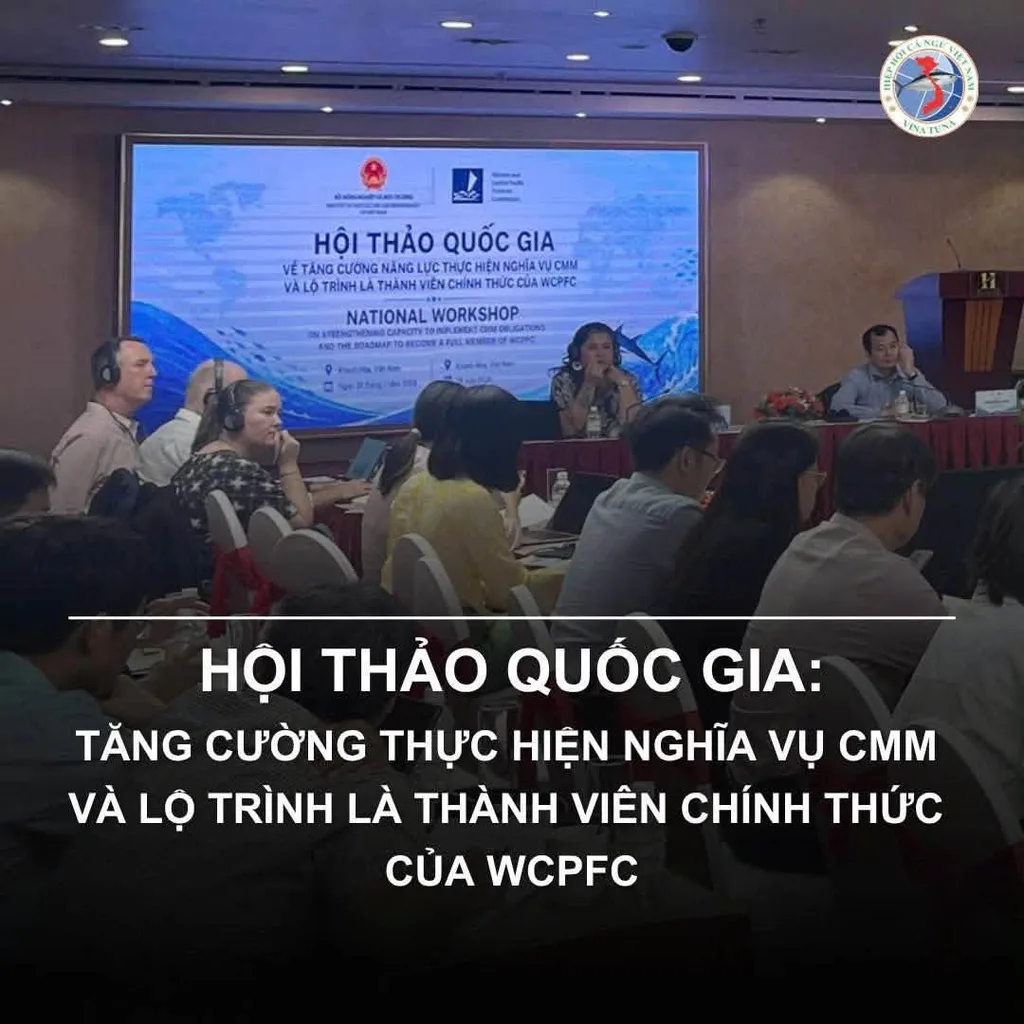
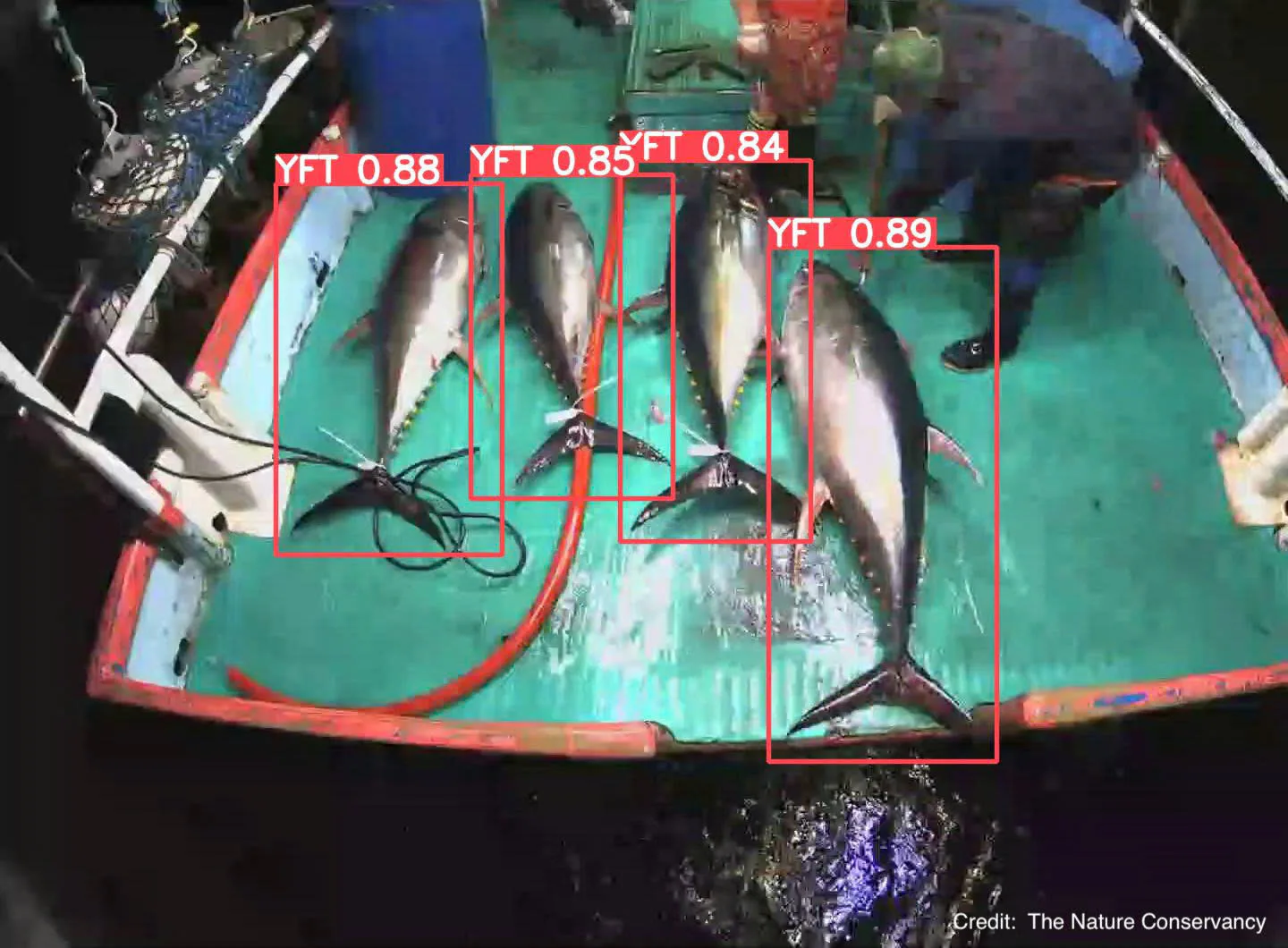
Tuna is one of Vietnam’s key seafood export commodities, with an estimated production volume exceeding 600 thousand tonnes. In recent years, tuna has consistently accounted for a large share of Vietnam’s total seafood export value and is currently the third most valuable product group of the national fisheries sector. Vietnamese tuna products are now exported to more than 110 markets worldwide, of which the United States, the European Union (EU), the Middle East, and CPTPP countries are the four largest, together accounting for 82–86% of total tuna export value.
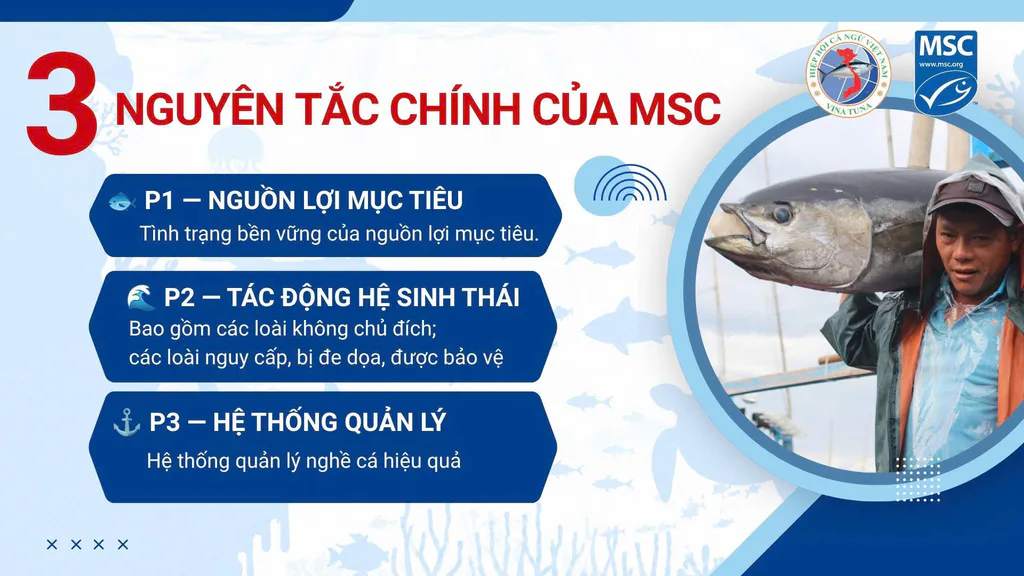
Within the product structure, canned tuna has increasingly played a critical role, driven by stable demand in major markets such as the EU, the United States, the Americas, and the Middle East. This segment offers higher value added, improving economic efficiency compared to raw material exports, with skipjack tuna serving as the primary raw material for processing. However, international market trends are evolving rapidly, as importers—particularly in the EU and the US—are tightening requirements on legal origin, sustainability, and eco-certification. In this context, sustainability certifications, especially the MSC (Marine Stewardship Council) ecolabel, are increasingly prioritized for wild-caught tuna products.
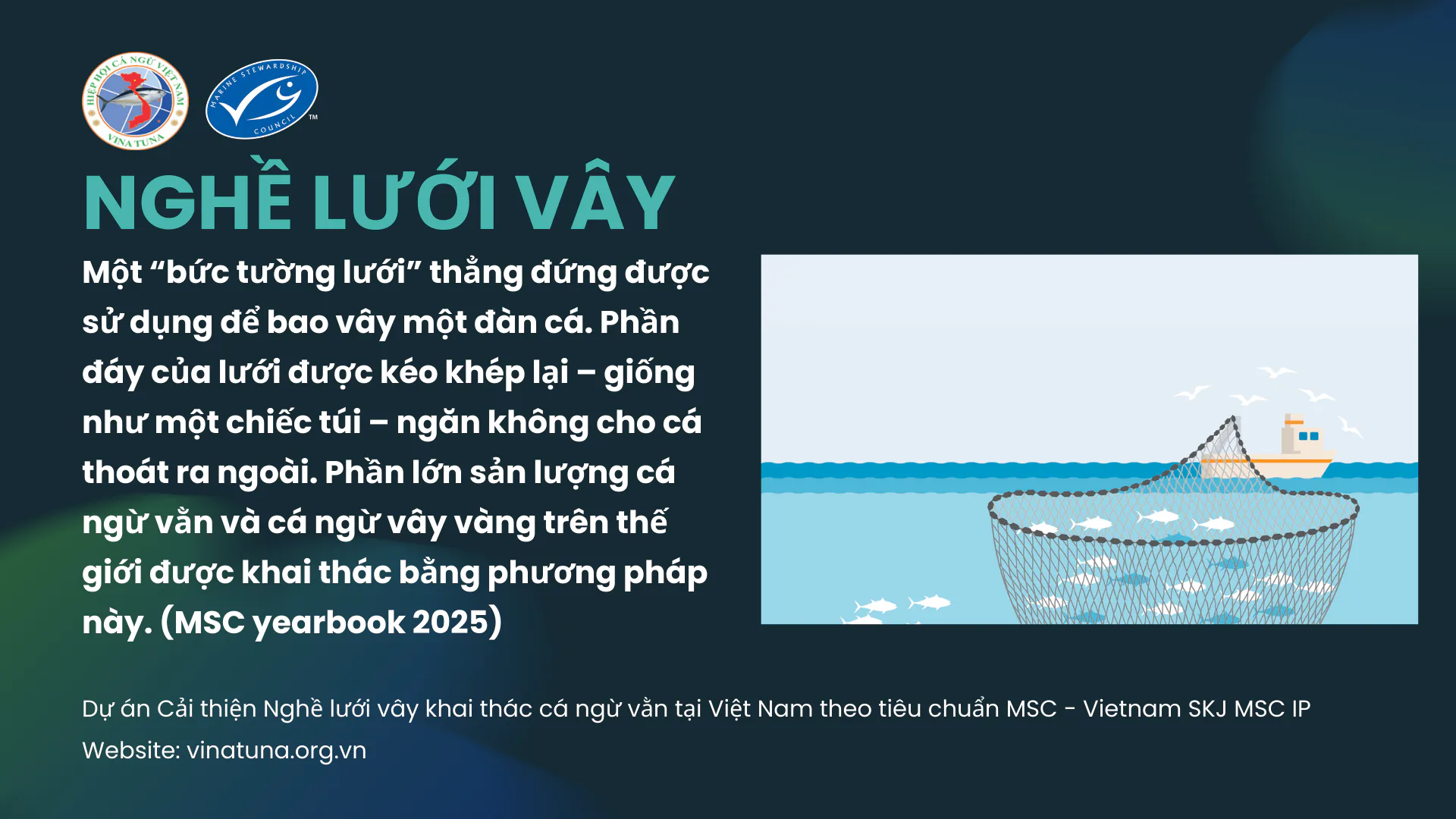
According to the MSC Tuna Year Book 2025, approximately 2.5 million tonnes of global tuna production have achieved MSC certification, accounting for 54% of global output. There are 71% of global tuna production is currently on—or moving toward—a sustainability pathway, including fisheries participating in the MSC Improvement Program (MSC IP), those under MSC Assessment, and Fishery Improvement Projects (FIPs). This demonstrates that sustainable fishing has become an inevitable global trend, with the MSC standard increasingly favored by international markets.
Tuna consumption trends in major markets:
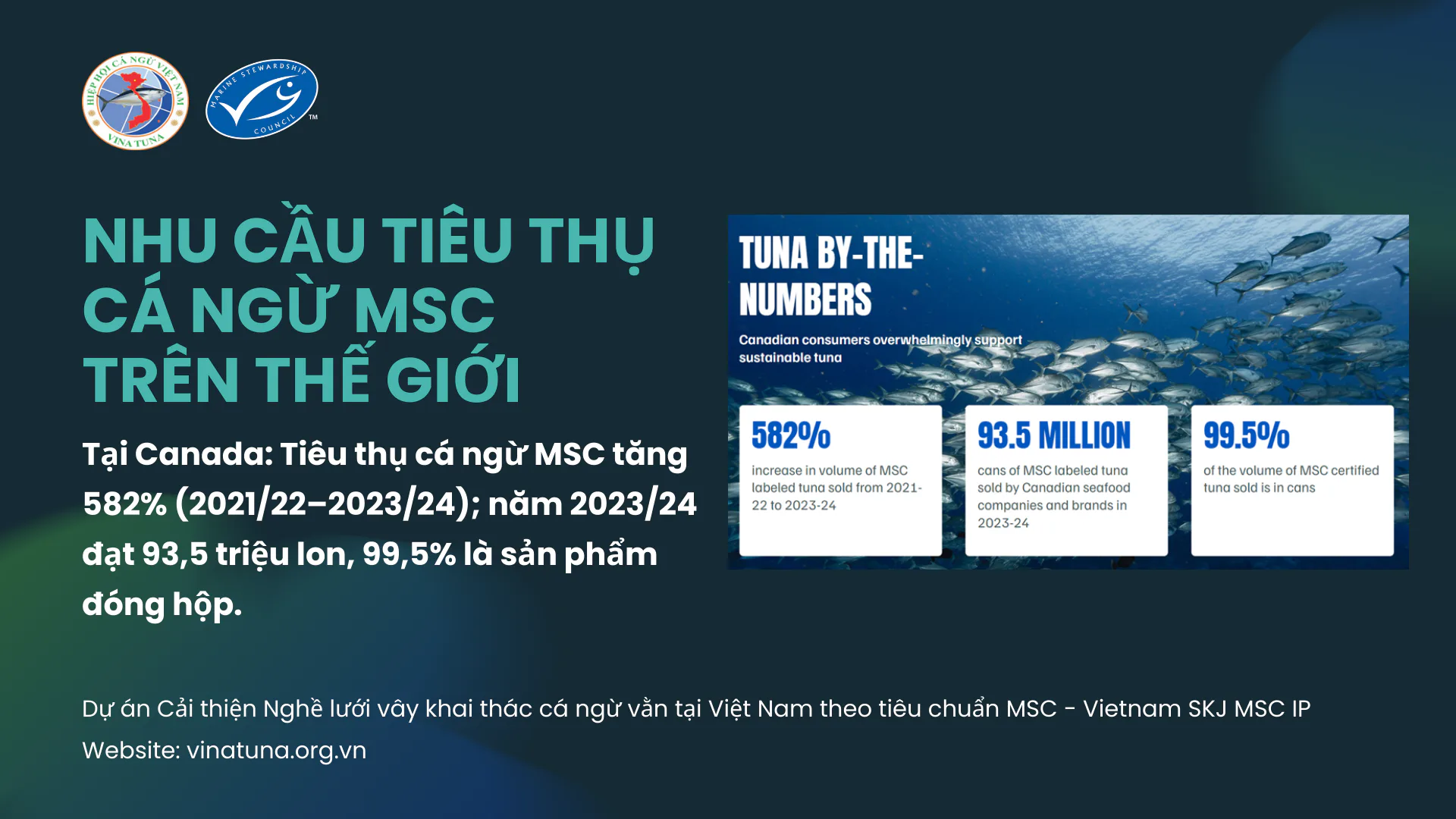
Canada:During the period 2021/22–2023/24, consumption of MSC-certified tuna products in Canada increased by 582%. In 2023/24 alone, the Canadian market consumed 93.5 million cans of MSC-labeled tuna, of which 99.5% were canned products, largely driven by two companies, Ocean’s and Clover Leaf.
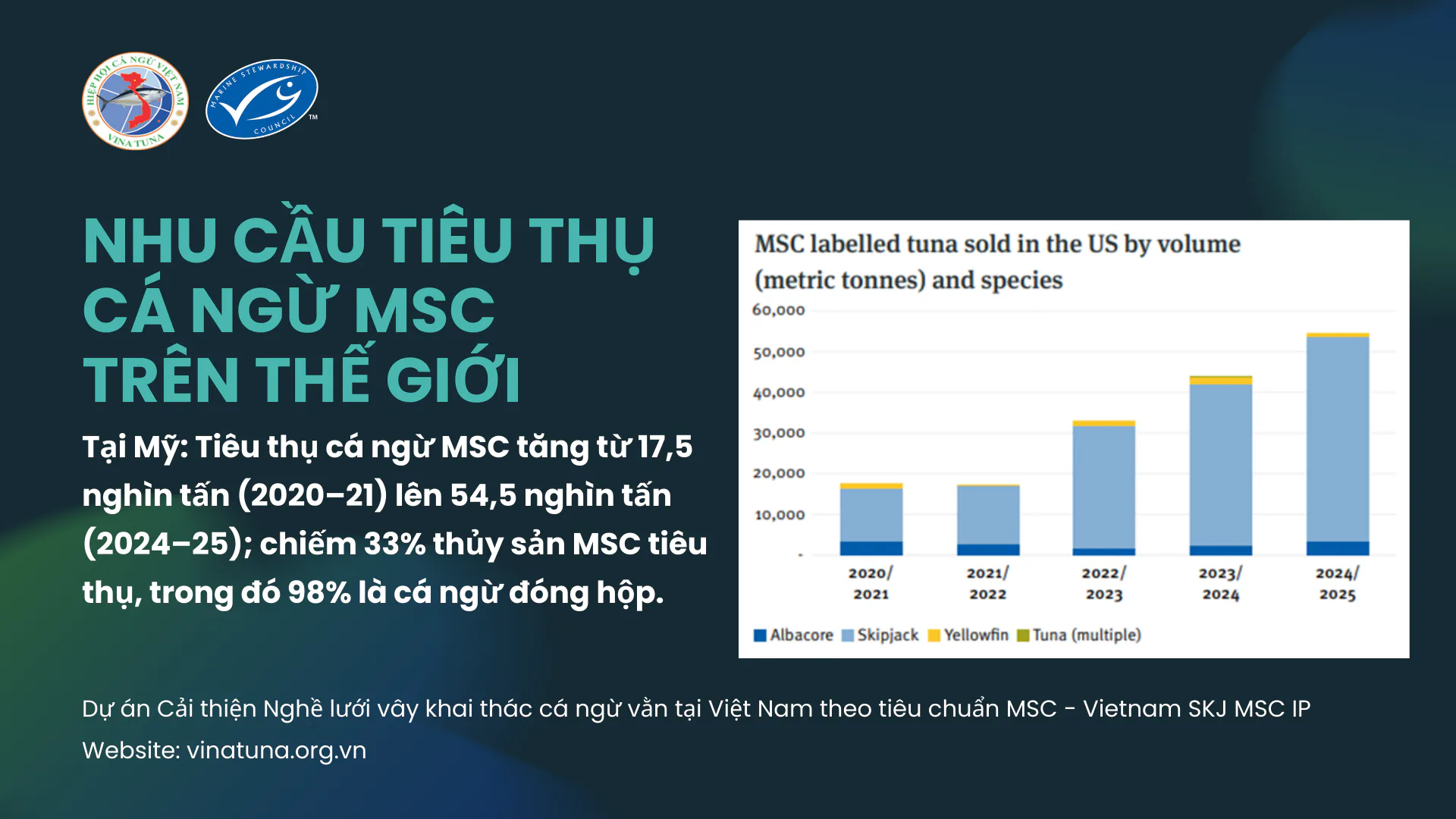
United States:For many years, tuna has been highly popular among U.S. consumers, supported by national brands such as Bumble Bee, Chicken of the Sea, and Starkist, as well as the widespread adoption of sushi since the 1980s–1990s. Since the first MSC-certified tuna products entered the U.S. market in 2009, the volume of MSC-labeled tuna has increased from 17.5 thousand tonnes (2020–21) to over 54.5 thousand tonnes (2024–25). Tuna now accounts for 33% of total MSC-certified seafood consumption in the U.S., of which 98% consists of canned tuna, and skipjack tuna represents 92% of the market share.
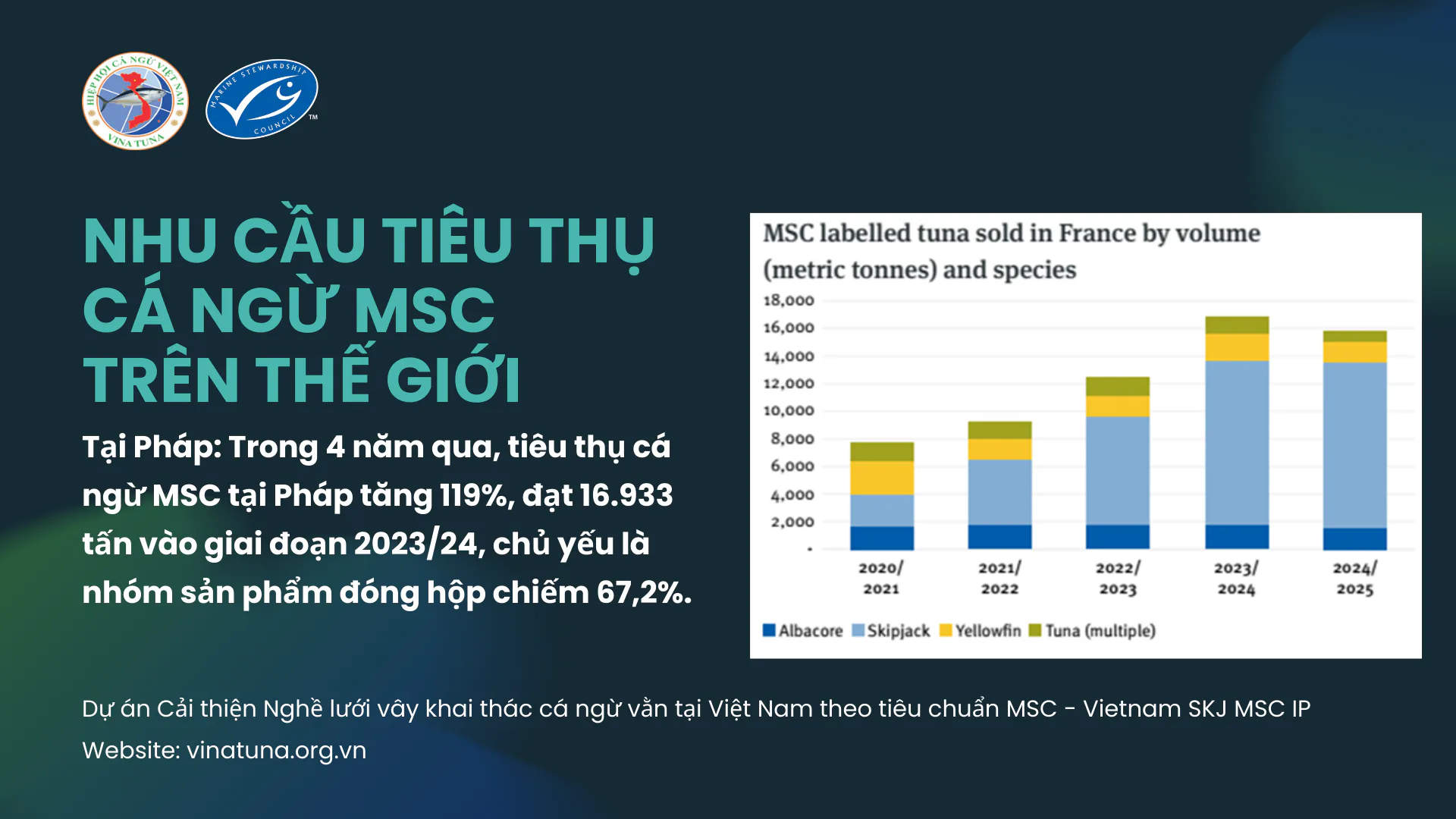
France:Over the past four years, consumption of MSC-certified tuna in France has increased by 119%, reaching 16,933 tonnes in 2023/24, with canned products accounting for 67.2% of total volume.
The fact that, MSC-certified tuna products are typically sold at higher prices than non-certified products in supermarkets, commonly at a 10–20% premium. Notably, a study based on Nielsen retail data in the U.S. (2017–2019) found that MSC-certified tuna could achieve price premiums of up to 44.6%, reflecting consumers’ willingness to pay for sustainable products (1).
The strong demand for MSC-certified tuna in key markets such as Canada, the United States, and France indicates that the MSC ecolabel is increasingly becoming a preferred requirement. As international importers and retail systems place greater emphasis on certified sustainable sourcing, MSC certification will enable Vietnamese tuna products to strengthen market access and enhance competitiveness relative to other regional suppliers.
It is evident that the MSC ecolabel serves as a “passport” for Vietnamese seafood to enhance credibility and expand access to markets with high requirements for legality, transparency, and sustainability. Achieving MSC certification delivers benefits across the entire value chain—from fishing, buying, processing, to exporting—by increasing product value and supporting the development of Vietnam’s tuna sector toward a responsible and sustainable model.
In Vietnam, the Ben Tre clam fishery represents a prominent success story as the first fishery in Southeast Asia to achieve MSC certification, generating clear socio-economic impacts. Annual MSC-certified clam production in Ben Tre averages 7,500–8,000 tonnes, with an estimated value of VND 200–250 billion, contributing to job creation, income growth, and improved livelihoods for approximately 20,000 members of seven cooperatives, along with thousands of local workers—particularly rural women—demonstrating the tangible effectiveness of the MSC-based sustainable fisheries model (2).
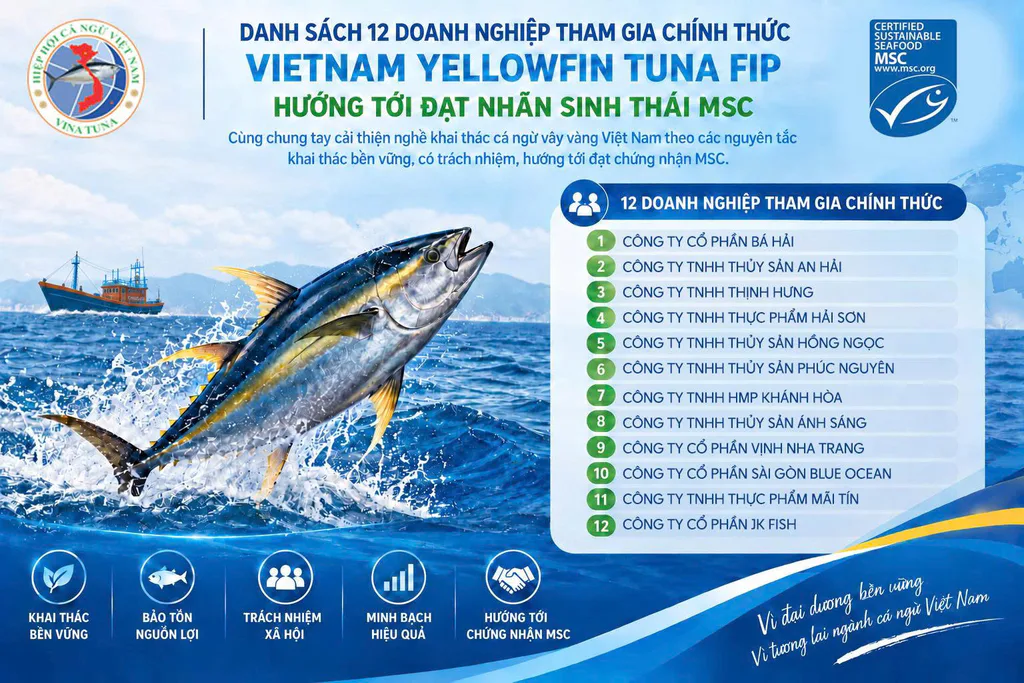
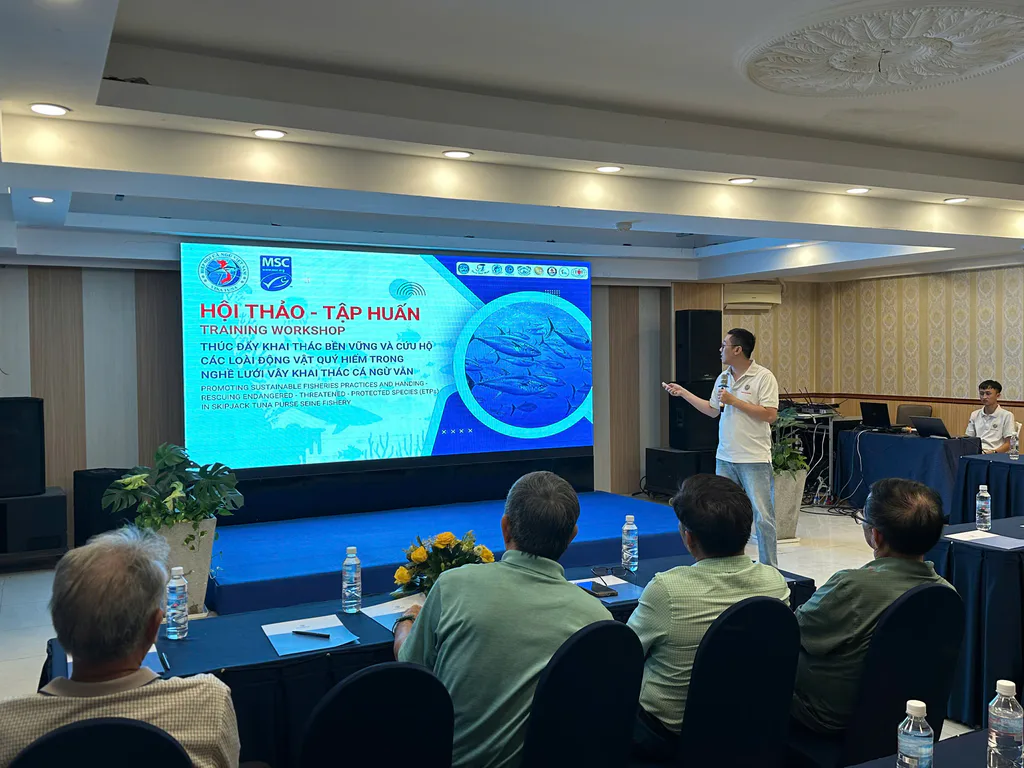
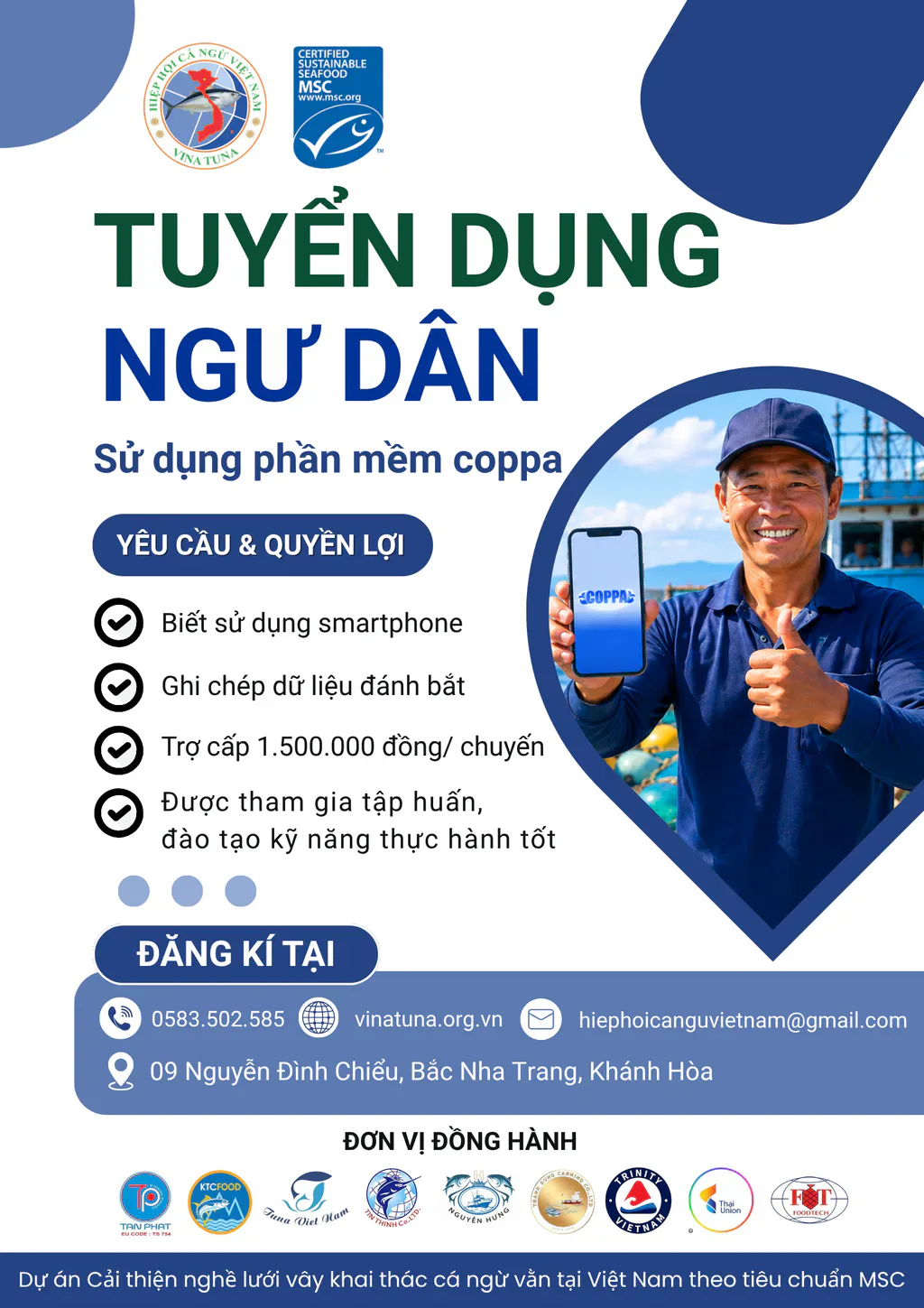
Building on recent progress, Vietnam’s tuna sector has been advancing along the MSC sustainability pathway. The yellowfin tuna handline fishery (YFT-FIP) has been being implemented since 2014, currently in its final stage and is expected to undergo a comprehensive assessment toward MSC certification by 2026. For the skipjack tuna purse seine fishery, it was officially recognized by MSC as eligible to participate in the MSC Improvement Program (SKJ MSC-IP) on 2 October 2025. The fishery has completed a pre-assessment and developed a five-year action plan, aiming to meet MSC standards by 2030–2031, with 10 domestic tuna processing companies participating and growing interest from both domestic and international buyers.
Achieving MSC certification for Vietnam’s tuna fisheries will enable access to premium markets, which currently account for over 60% of global demand for certified sustainable tuna, thereby stabilizing market outlets and directly increasing product value by 10–20% (or potentially higher) compared to non-certified products (1). Moreover, fisheries management activities aligned with MSC standards will support effective fisheries governance, help sustain fish stocks, improve stable incomes for fishers, and enhance Vietnam’s national reputation and the global standing of its seafood industry.
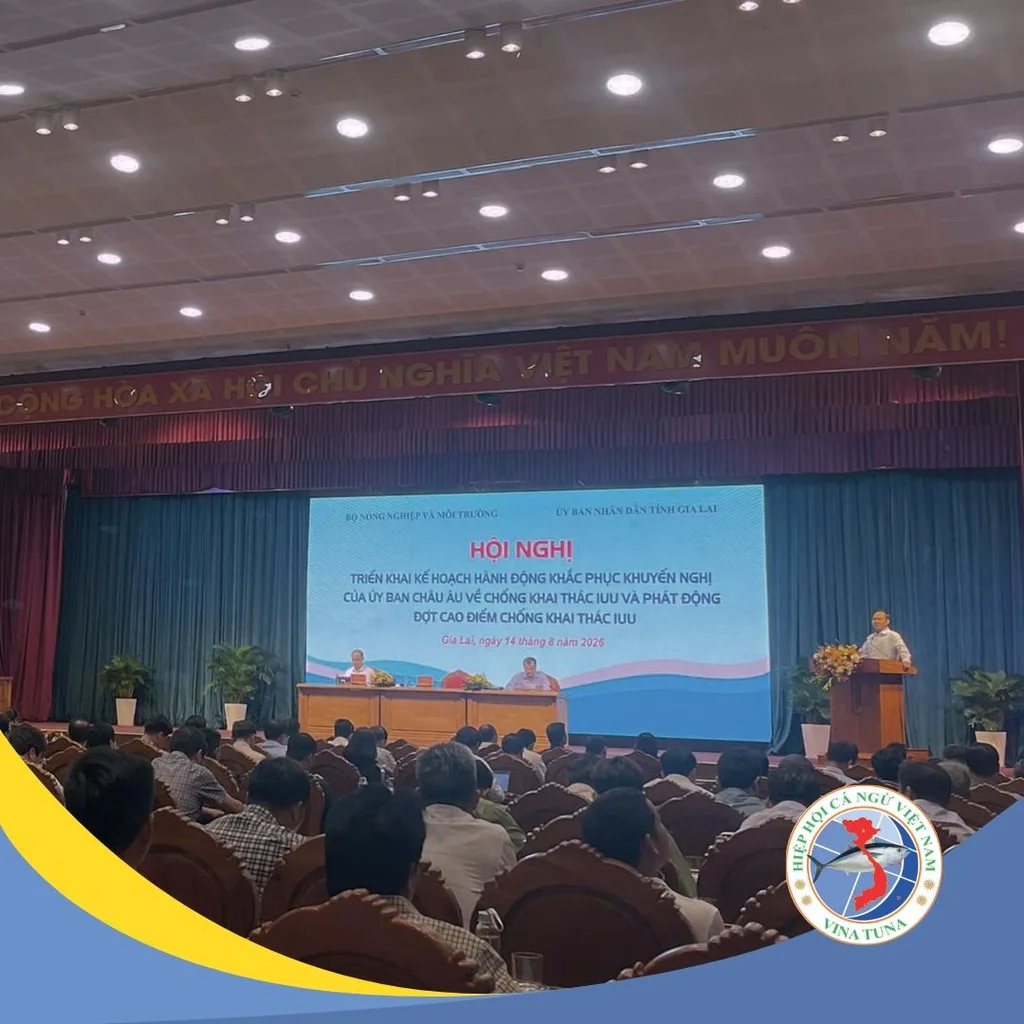
The Vietnam SKJ MSC IP project has already received valuable support and collaboration from government authorities, research institutes, and industry organizations. The Vietnam Tuna Association (VINATUNA) is honored to serve as the coordinating organization for the VN SKJ MSC IP and respectfully calls for participation and resource support from all stakeholders, toward achieving MSC ecolabel, promoting the sustainable and responsible development of Vietnam’s skipjack tuna purse seine fishery.
For further information, please contact VINATUNA:
Office Contact:Mr. Bình – Email: hiephoicanguvietnam@gmailProject Manager:Mr. Hoàng – Email: huyhoang21096@gmail.com
References:(1) https://eatandgeek.com/how-much-does-a-can-of-tuna-fish-cost/
https://www.pacifical.com/wp-content/uploads/Germany-May-2020.pdf
https://portal.findresearcher.sdu.dk/en/publications/valuing-sustainability-price-premiums-for-dolphin-safe-and-msc-ce/
(2) https://van.nongnghiepmoitruong.vn/clam-brings-about-vnd-200-billion-year-to-ben-tre-d392902.html