Tiếng Việt


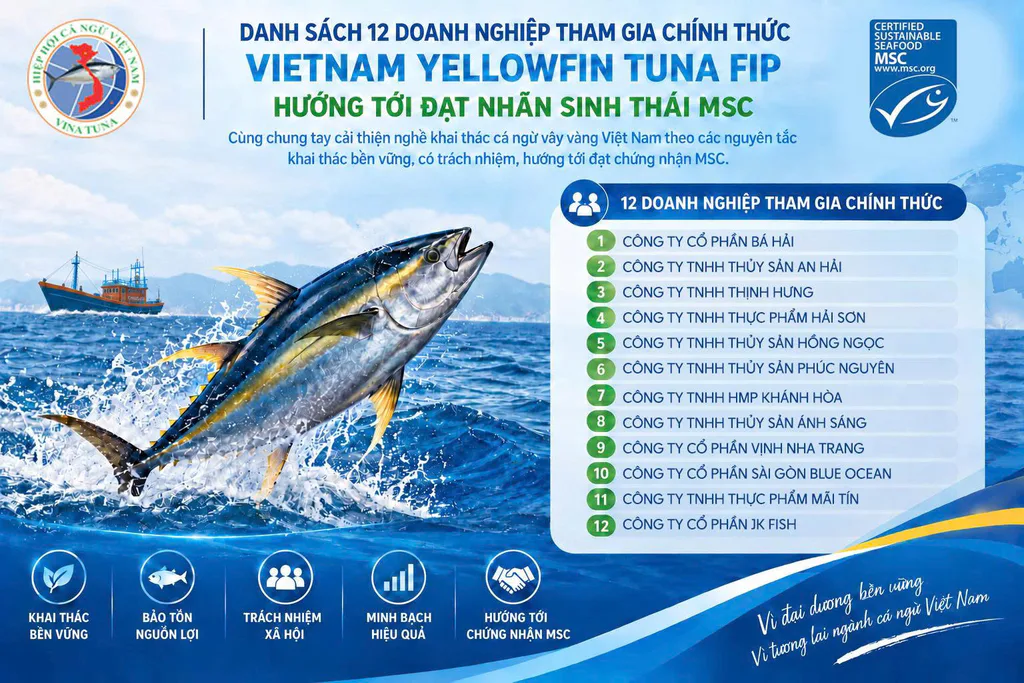
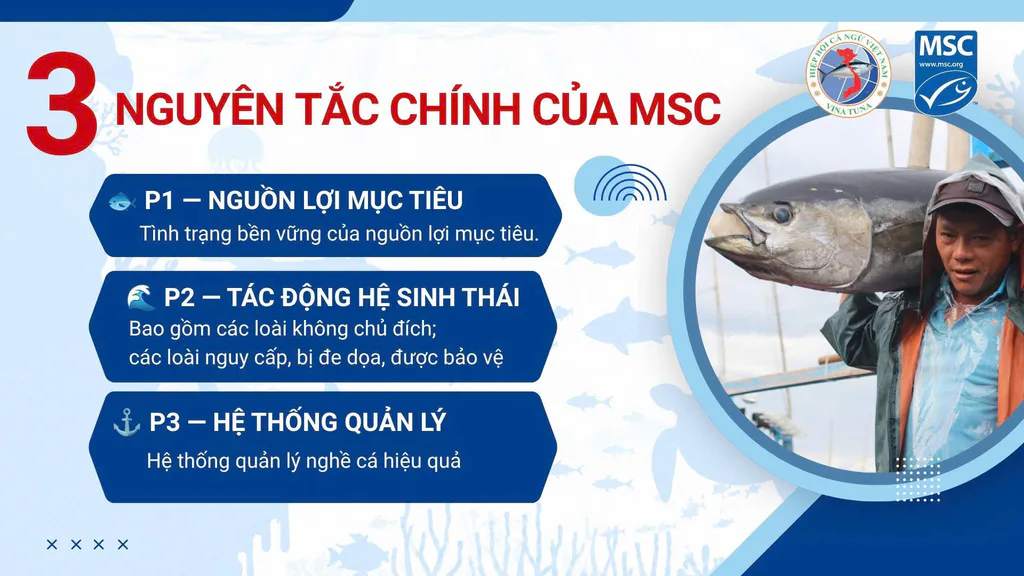
As Vietnam's fisheries sector continues its efforts to have the European Union's IUU "yellow card" lifted, strengthen fisheries management, and move towards internationally recognized sustainability certifications such as the Marine Stewardship Council (MSC), the role of Fisheries Observers has become increasingly important.
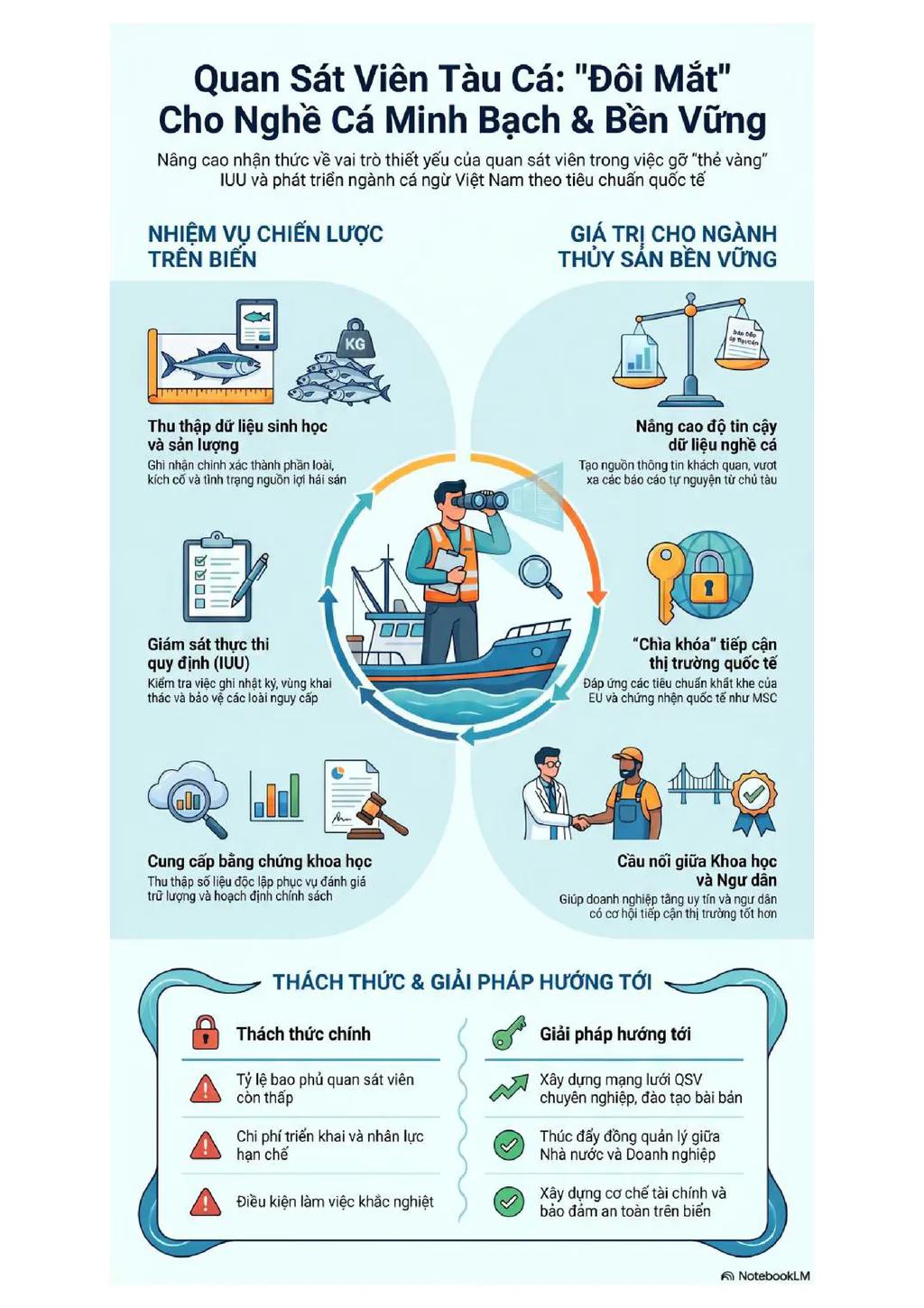
Fisheries observers are not only an essential component of modern fisheries management, but also a practical solution for improving transparency, promoting responsible fishing practices, and supporting the sustainable development of Vietnam's marine fisheries.
Who are Fisheries Observers?
Fisheries Observers are trained professionals who work independently aboard fishing vessels to collect, record, and report information about fishing operations at sea.
Their key responsibilities include:
-
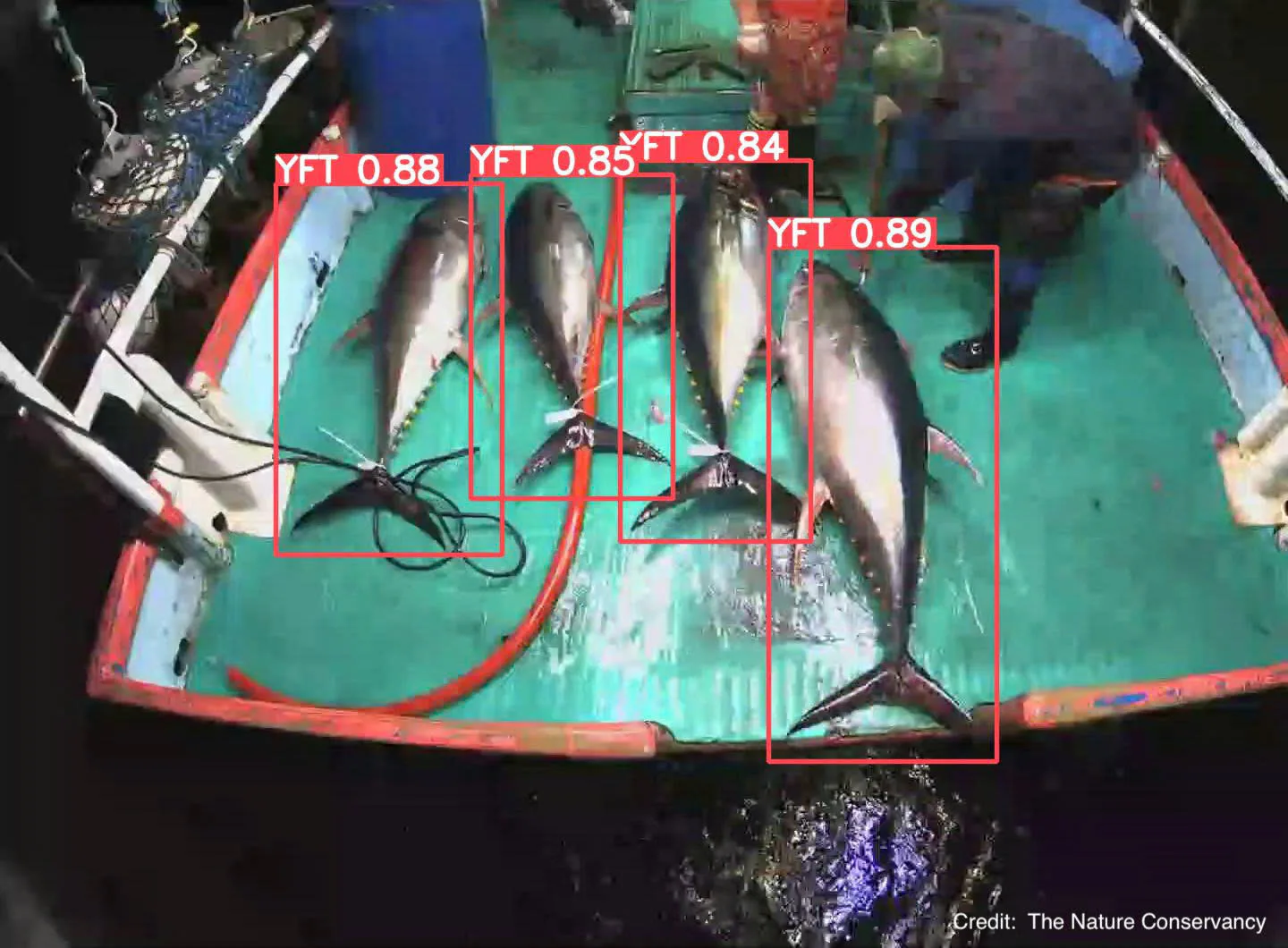
Recording catch volume and species composition.
-
Monitoring the size, sex, and biological condition of fish.
-
Recording bycatch and non-target species.
-
Monitoring compliance with fisheries regulations.
-
Collecting data for scientific research and fisheries management.
-
Supporting the assessment of fishing impacts on marine ecosystems.
Why are Fisheries Observers Important?
Effective fisheries management cannot rely solely on vessel logbooks or reports submitted by vessel owners.
Fishing activities take place over vast ocean areas, often under challenging weather conditions and during long fishing trips. Having trained observers onboard helps provide independent and reliable information on fishing operations.
Improving the Quality of Fisheries Data
Information collected by fisheries observers is considered objective and scientifically reliable.
These data support:
-
Fish stock assessments.
-
The development of sustainable harvest strategies and catch limits.
-
Science-based fisheries management and conservation policies.
Promoting Transparency and Combating IUU Fishing
Fisheries observers help monitor compliance with fisheries regulations, including:
-
Fishing logbook requirements.
-
Authorized fishing grounds.
-
Target species and catch records.
-
Measures for conserving marine resources.
Their work contributes to reducing Illegal, Unreported and Unregulated (IUU) fishing, while strengthening transparency, accountability, and responsible fishing practices throughout the seafood supply chain.